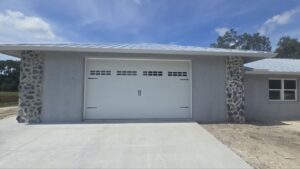

The wind stops, the sky brightens, and the first instinct for most Florida homeowners is to walk straight to the garage and hit the opener button. That’s the exact instinct to resist. What you do in the first few hours after a storm passes has more influence on your insurance payout than almost anything else in the entire claims process, and a huge share of that outcome comes down to whether you inspected the door correctly before touching it. This guide walks through what a garage door actually looks like when it’s failed structurally but hasn’t fully collapsed, why opening it in that state can turn a repair into a much bigger problem, and how to build a documentation file that holds up when an adjuster or a property management company starts asking questions.
The First Walkaround, Done the Right Way
Before anything else, confirm it’s actually safe to be outside. Downed lines, standing water near the garage, and loose debris on the roofline are all reasons to wait for daylight and a clear all-clear from local authorities before doing a detailed inspection. Once it’s safe, the walkaround itself takes ten to fifteen minutes if you know what you’re looking at, and most of that time should be spent looking rather than touching.
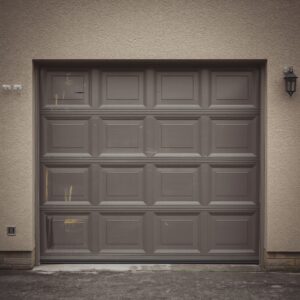
Start from a distance. Stand at the end of your driveway and look at the door as a whole shape before you get close enough to focus on individual panels. A door that’s failed structurally often shows its first sign as a subtle change in the overall silhouette, a slight curve where there used to be a straight line, long before any single panel looks obviously broken.
What a Compromised Door Looks Like From Ten Feet Away
Look along the horizontal seams between panels. On an undamaged door these seams run in a perfectly straight line from one side to the other. A wave, a dip, or a spot where the line breaks and doesn’t quite meet up on the other side of a panel joint is a sign the door has flexed under pressure and may not have fully returned to its original shape, even if it looks closed and sealed.
Check the gap along both vertical edges where the door meets the frame. It should be even from top to bottom. A gap that widens toward the top or bottom, or that’s visibly wider on one side than the other, usually means the track on that side has shifted, bent, or pulled away from its mounting points during the storm.
Getting Close Without Operating the Door
Once you’ve done the distance check, walk up to the door but leave the opener alone. Run a hand along the surface the way you would check for hail dents on a car hood, feeling for dimples, ripples, or spots where the panel doesn’t sit flat against your palm. Storm debris moving at high speed leaves marks that are sometimes easier to feel than to see, especially on a textured or painted surface.
Check the bottom seal and the corner brackets where the door meets the concrete slab. Standing water, torn weatherstripping, or a bracket that’s visibly pulled away from the frame are all signs of stress that happened during the storm even if the door currently looks like it’s sitting in its frame normally.
Why a Bowed Door Should Not Be Opened
This is the single most important instruction in this entire guide, and it’s also the one most homeowners get wrong because the instinct to check if something still works is so strong. If you see visible bowing, curving, or a door that’s no longer sitting flush against its frame, do not press the opener button and do not try to lift it manually to see how bad the damage is.
The Mechanics of Why This Is Dangerous
A garage door under spring tension relies on every panel and every track section holding its intended shape to distribute that tension evenly. Once a panel has bowed or a track has bent, the tension is no longer distributed the way the system was engineered for, and forcing the door to move can cause the whole assembly to buckle suddenly rather than gradually. That sudden failure can send a spring, a cable, or an entire panel section flying, and it happens fast enough that nobody standing nearby has time to react.
There’s also a second, quieter risk that matters just as much for your wallet. A door that’s flexed out of shape but still technically operable can look completely fine after you close it again, hiding the damage from a casual glance while the internal stress on the hardware gets worse every time it cycles. Homeowners who keep using a bowed door because it still opens and closes often end up with a much larger repair bill once a technician finally opens up the mechanism and finds cracked brackets, stripped mounting holes, or a track that’s bent well beyond what a visual check from the driveway would suggest.
What to Do Instead of Testing It
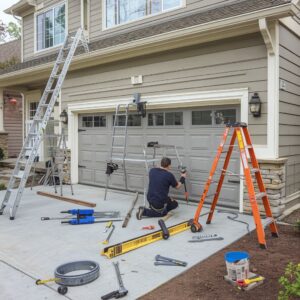
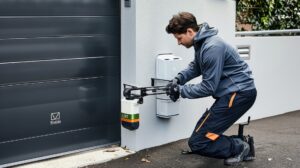
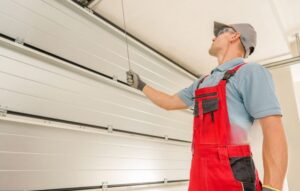
If the door is bowed but still closed, leave it closed and secure the interior side of the garage from anything that could be knocked loose if the door does fail later. If the door is bowed and partly open, and it’s safe to approach, block the opening with plywood or a heavy tarp rather than trying to force the door the rest of the way in either direction. Call a technician for an assessment before the door gets touched again, since a professional can tell within a few minutes whether the door is safe to operate manually or needs to stay locked down until repair.
Building a Documentation File Insurance Adjusters Actually Trust
Adjusters see dozens of storm claims in the weeks after a hurricane, and the files that move fastest through the process are the ones with clear dates, complete angles, and no gaps between the storm and the first photo. The files that stall are the vague ones, a handful of blurry shots taken days later with no context for when the damage actually happened.
What to Photograph and in What Order
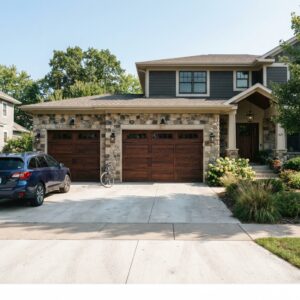
Start with a wide shot of the entire garage door in the context of the house, showing the full opening and enough of the surrounding wall that anyone looking at the photo later can confirm it’s your property and your door. Follow that with medium shots of each panel, then close-ups of every specific issue you found during the walkaround, the bowed seams, the shifted gap, the pulled bracket, the torn seal.
Take a short video walking the full length of the door as well, narrating out loud what you’re seeing as you go. A video with your voice describing the date and the specific problem carries more weight than a folder of unlabeled photos, because it removes any ambiguity about when the footage was taken and what you noticed in the moment rather than after the fact.
Documenting the Storm Itself, Not Just the Door
Save the National Hurricane Center advisory or your local news coverage that names the storm and the date it moved through your area. Screenshot the wind speed reported for your county if it’s available, since adjusters and insurers need to confirm a qualifying weather event actually happened at your address on the date you’re claiming. This detail matters even more if you’re filing weeks later after discovering damage you initially missed.
If neighbors watched the storm from their windows or captured video of the wind hitting your property, ask them for copies before memories fade and phones get wiped or upgraded. A neighbor’s timestamped video showing your garage door flexing during the storm itself is exactly the kind of independent corroboration that turns a disputed claim into an approved one.
| Expert insight
The claims we see get denied or delayed almost always have the same gap in them. The homeowner fixed the door first because they needed to secure the house, and only thought about photos afterward. By then the bent bracket has already been replaced, the torn seal thrown in the trash, and the adjuster is left comparing a repaired door to a homeowner’s memory of what it looked like. Document everything before a single screw gets turned, even if that means living with a plywood cover over the opening for a few extra days. The insurance payout depends on it far more than the speed of the repair does. |
Reporting Deadlines and Where the Clock Actually Starts
Florida law sets a firm window for reporting hurricane and windstorm damage, and it’s shorter than most homeowners assume. Under the current statute, an initial notice of claim generally needs to reach your insurer within one year of the date of loss, which is the date the storm made landfall, not the date you first noticed a problem with the door. A supplemental claim covering damage you discover later, after an initial claim is already filed, generally needs to be reported within eighteen months of that same date of loss.
This timeline catches people off guard because garage door damage isn’t always obvious right away. A track that’s been quietly working its way loose for weeks after a storm can finally fail on a random Tuesday afternoon, long after the homeowner assumed the worst of the storm damage was already handled and paid out. If that happens, the supplemental claim path exists specifically for this situation, but only if you report it within the window and can tie the new damage back to the original storm date.
For Homeowners Already Mid-Claim
If you’ve already filed an initial claim for other storm damage, such as roof or fence repair, and later notice the garage door problem, don’t assume it’s automatically included. Insurers generally expect each distinct item of damage to be reported, and a supplemental claim filed specifically for the garage door, with its own photos and its own note tying it to the same storm date, moves faster than an assumption that everything got bundled together automatically.
For Rental Property Managers
Managing multiple units after a regional storm means juggling several reporting clocks at once, and it’s easy to lose track of which property’s damage was reported when. Keep a simple spreadsheet with the property address, the date of loss, the claim number once assigned, and the reporting deadline calculated from that date, checked against the actual policy language for each property since coverage terms can vary between owners and buildings. A tenant who reports garage door damage informally by text message is not the same as a documented notice to the insurer, so treat every tenant report as the start of your own internal clock to get it properly filed.
FAQ
Question. Is it safe to manually pull a garage door up during a power outage if it looks undamaged?
Answer. If a visual and hand check found no bowing, no shifted gaps, and no pulled brackets, manual operation using the emergency release cord is generally fine. The concern in this guide is specifically about doors that already show signs of structural flex, where manual force can finish the failure that the storm started.
Question. What if the storm damage isn’t visible until several days later?
Answer. This happens often with hardware that was stressed but didn’t fail immediately. Document it the moment you notice it, note the date you discovered it separately from the date of the storm, and file it as a supplemental claim rather than assuming the window has closed, since Florida’s supplemental claim deadline runs eighteen months from the original date of loss.
Question. Should I get a repair estimate before or after the insurance adjuster visits?
Answer. Getting one estimate beforehand is useful context for you, but wait until after the adjuster’s own inspection before committing to repair work, since starting repairs first can complicate the claim if the adjuster’s assessment differs from the contractor’s initial estimate.
Question. Does a homeowners association need to be notified about garage door damage?
Answer. Most single-family HOAs don’t need direct notice for interior garage systems, but if the property is a condo or townhome where the garage door falls under shared or association-maintained structures, check the governing documents before filing anything, since the claim may need to route through the association’s master policy instead of an individual homeowner policy.
Question. Can a neighbor’s fallen tree limb that dented the door be claimed the same way as wind damage?
Answer. Yes, debris impact during a named storm is typically covered under the same windstorm provisions as direct wind damage, and it should be documented the same way, with photos of the debris in place before it’s moved along with photos of the resulting dent or damage to the door itself.