
Water recedes faster than people expect, and that’s exactly what makes garage flooding so deceptive for homeowners along low-lying coastal lots and barrier islands. The floor dries in a day, the smell fades in a week, and the door still opens when you press the button, so the whole event starts to feel like it passed without leaving much behind. It didn’t. Storm surge and heavy rain push water directly into the opener, the control board, the sensors, and the bottom several inches of the door itself, and the real damage from that exposure often doesn’t show up until weeks later when a motor seizes or a circuit finally shorts for good. This guide walks through exactly what floodwater does to each part of a garage door system, what can genuinely be restored, and what has to be replaced for safety reasons regardless of how normal it looks right now.
Why Flood Damage to a Garage Door Shows Up Late
The instinct after any flood is to check whether things still work, and a garage door opener is a forgiving piece of equipment right up until it isn’t. Motors can run for weeks on corroding contacts before a connection finally fails completely, and circuit boards can pass every test you’d think to run at home while a slow chemical reaction eats through a trace on the board that only shows itself when the unit is under full load during a hot afternoon.
This delay is exactly why so many homeowners on Manasota Key, Longboat Key, or along the Intracoastal in Punta Gorda end up dealing with a second round of garage door problems weeks after a storm that seemed to have caused only minor flooding. The water was there for a few hours, the door still moved the next morning, and everyone moved on to bigger repairs like drywall and flooring. The garage door system kept degrading quietly the entire time.
What Storm Surge Water Actually Contains
Floodwater from storm surge is fundamentally different from a clean rainwater puddle, and this distinction matters for every decision that follows. Surge water typically carries salt, sediment, fuel residue, and in many coastal neighborhoods, backed-up sewage from overwhelmed septic and stormwater systems. Flood recovery guidance from FEMA and electrical trade associations classifies this as contaminated water, and contaminated water accelerates corrosion at a pace that clean water simply doesn’t match.
Salt in particular is brutal on anything metal or electronic. It doesn’t just sit on a surface and rinse away, it works into seams, connector pins, and any place two dissimilar metals meet, and it keeps drawing moisture out of the air for months afterward even in a garage that looks bone dry. This is the mechanism behind components that test fine in October and fail in January.
The Timeline of a Slow Failure
In the first few days, expect nothing unusual, maybe a slightly sluggish door or a sensor light that flickers occasionally. Over the following few weeks, corrosion on circuit board contacts and motor windings progresses, and intermittent faults start appearing, a door that reverses for no visible reason, an opener that sometimes doesn’t respond to the remote. By the second or third month, full failures become common, the kind where the opener simply stops working, often at the worst possible time.
The Opener and Control Board
The opener motor housing and control board sit mounted on the ceiling of most garages specifically because that position keeps them above ordinary splash and minor water intrusion. Storm surge doesn’t respect that design assumption. In a garage with even eighteen inches of standing water, a wall-mounted control panel or a low-mounted receiver unit can end up fully submerged, and even a ceiling-mounted opener can take on moisture through condensation and humidity if the whole structure sat wet for days.
Why Electricians and Manufacturers Say Replace, Not Repair
The National Electrical Manufacturers Association has published clear guidance stating that electrical equipment submerged in floodwater should be replaced rather than reconditioned, and the National Electrical Code’s deterioration provisions back this up. The reasoning isn’t overly cautious, it’s about what corrosive floodwater does to conductors and circuit boards at a level you can’t inspect visually. A board that passes a bench test today can develop an internal short six months from now as corrosion continues spreading between traces that looked clean when someone wiped them down.
For a garage door opener specifically, this means a control board that took on water during storm surge should be treated as compromised even if the unit currently powers on and runs the door normally. The cost of a new logic board or a full opener replacement is real, but it’s a fraction of the cost and risk of a motor that fails unpredictably or, worse, a wiring fault that creates a fire risk inside an attached garage.
Signs the Opener Took on More Water Than It Looks Like
Check the housing itself for a visible waterline, a stain or discoloration band that shows how high water rose against the unit. Open the cover if you’re comfortable doing so with the power disconnected, and look for white or greenish corrosion powder on any metal contacts, since that residue is a direct sign of moisture exposure even after everything has dried. A musty smell coming specifically from the opener housing, distinct from the general garage smell, usually means moisture is still trapped somewhere inside.
Sensors and the Safety System
The photo-eye sensors mounted low on either side of the door track are almost always the first thing to show flood damage, purely because of where they sit. They’re positioned close to the floor by design, since their job is detecting anything in the door’s path, and that same positioning puts them directly in the path of rising water before almost anything else in the garage.
What Water Does Inside a Sensor Housing
Each sensor contains a small circuit board and an infrared emitter or receiver, sealed inside a plastic housing that’s built to resist dust and incidental splashing rather than full submersion. Once water gets past that seal, it sits against the circuit traces, and salt or sediment in that water begins the same corrosion process described above, just on a much smaller and more fragile scale. A sensor that got fully submerged during storm surge is not a candidate for drying out and reusing, and manufacturers and technicians alike are consistent on this point, replacement is the only reliable fix.
The practical safety concern here is serious enough to repeat plainly. These sensors exist to stop the door from closing on a person, a pet, or a vehicle. A sensor with corroded internals doesn’t necessarily fail by simply not working, sometimes it fails by responding inconsistently, working nine times out of ten and missing the tenth at exactly the wrong moment. That’s a far more dangerous failure mode than a sensor that just stops working entirely and forces the door into manual operation.
Testing Sensors Without Trusting Them Too Far
If sensors were exposed to any standing water, run the basic reversal test regardless of how they look. Close the door and place an object in the sensor beam path, and confirm the door reverses immediately every single time across several attempts. Inconsistent behavior on this test, even once, is enough reason to replace both sensors as a matched pair rather than troubleshooting further, since manufacturers sell them that way for a reason and mismatched sensitivity between an old and new unit can itself cause problems.
The Bottom Panel and Weather Seal
This is usually the most visually obvious flood damage and, somewhat counterintuitively, often the least expensive to address relative to the electronics discussed above. The bottom panel and seal take the most direct and prolonged water contact of any part of the door, simply because they sit at floor level throughout the entire flood event.
What to Look For on Steel and Aluminum Panels
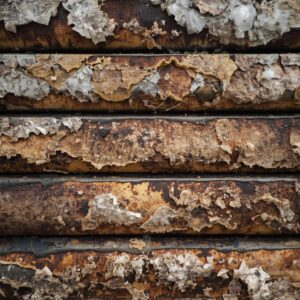
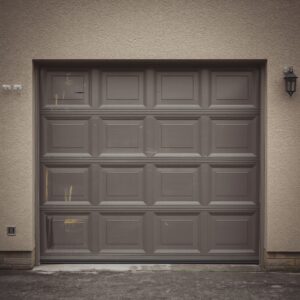
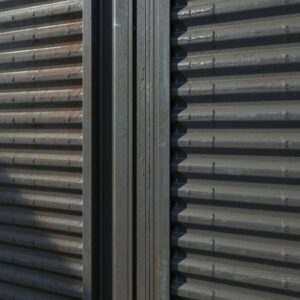
Check the bottom eighteen to twenty-four inches of the door for bubbling paint, which usually means water got behind the surface coating and is sitting against bare metal underneath. Press gently on the panel in a few spots to check for soft or spongy sections, particularly if the door has an insulated core, since trapped moisture inside that core can promote rust from the inside out long after the exterior looks dry. Surface rust that wipes away is a cosmetic problem, rust that’s created pitting or flaking in the metal itself is a structural one that will keep spreading.
The Weather Seal and What Happens Underneath It
The rubber or vinyl seal along the bottom edge is designed to keep out normal weather, not to hold back a foot or more of surge water, and it usually shows the strain first as a seal that’s pulled loose, cracked, or gone permanently rigid from prolonged saturation. Behind that seal, check the bottom track and the concrete threshold for silt buildup, which is common after storm surge and can jam the door’s movement even after everything else has been addressed. Clearing this out fully, not just from the visible opening but from inside the track channel itself, prevents a second round of problems once the door starts cycling normally again.
| Expert insight
The call we get most often after coastal flooding sounds like this, the door still works, so is it really necessary to replace the opener? The honest answer is that working right now and being safe over the next year are two different questions. Corrosion from storm surge doesn’t announce itself, it just quietly narrows the margin on a circuit board until one hot afternoon in August it finally gives out, usually with the car halfway in or out of the garage. We’d rather tell a homeowner the truth up front than let them find out the hard way three months later. If a control board or a set of sensors took on surge water, we treat that as a replacement, not a maybe. |
What This Means for Your Insurance Claim
Homeowners filing for a payout after coastal flooding run into a specific problem with garage door damage that’s less common with obviously destroyed items like furniture or drywall. A door that opens and closes normally is much harder to justify replacing to an adjuster who’s looking at dozens of claims and doesn’t have time to research corrosion timelines for garage door electronics.
Documenting the Water Level Before Anything Dries
Photograph the waterline on the opener housing, the wall-mounted control panel if you have one, and the sensor housings themselves before any cleanup begins. A visible stain showing exactly how high the water reached against each component is far more persuasive documentation than a written description after the fact, and it directly supports the argument that specific electrical components were submerged rather than just generally exposed to a humid environment.
Include a wide shot showing the overall water level in the garage relative to the door and opener mounting height, since this single photo does more to establish submersion than a dozen close-ups without that context. If you have a water mark on a wall or a cabinet nearby that clearly shows the flood height, include that in the same frame.
Getting Manufacturer Guidance in Writing
Most major opener manufacturers, including the brands commonly installed across Sarasota and Charlotte counties, have published statements or technical bulletins recommending replacement of any control board or motor that’s been submerged. A technician’s written assessment referencing this manufacturer guidance, rather than just a verbal recommendation, gives an adjuster something concrete to point to when approving a full opener replacement instead of a cheaper sensor-only fix that won’t actually resolve the underlying corrosion problem.
FAQ
Question. How high does water need to reach before the opener is considered flooded?
Answer. Any contact with the control board, motor housing, or wiring connections counts, regardless of overall garage water depth. A ceiling-mounted opener in a garage with two feet of standing water might stay completely dry, while a wall-mounted control panel in a garage with only a few inches of surge water can still take a direct hit.
Question. Can the springs and cables be reused after a flood if they’re not electrical?
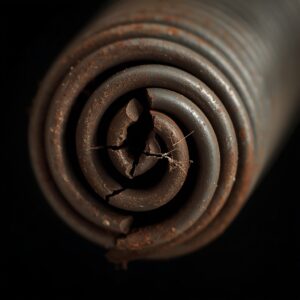
Answer. Springs and cables aren’t electronic, but they’re still steel under constant tension, and salt exposure accelerates the kind of corrosion that leads to sudden cable failure or spring breakage. These components should be inspected closely rather than automatically replaced, since a light surface treatment and inspection can sometimes be enough if exposure was brief and the metal shows no pitting.
Question. Is it worth drying out a flooded opener with a fan before deciding on replacement?
Answer. Airflow helps remove surface moisture and can reduce mold growth, but it doesn’t reverse corrosion that’s already started on internal contacts, so drying the unit out is reasonable general practice while you wait for a professional assessment, not a substitute for that assessment.
Question. Does the type of garage door material change how much flood damage it takes?
Answer. Aluminum and vinyl doors resist rust better than uncoated steel, but no common residential material is immune to the effects of prolonged saltwater contact, and insulated doors specifically can trap water inside their core where it’s invisible from the outside and harder to fully dry.
Question. Should the whole system be replaced at once or can components be addressed separately?
Answer. Addressing components separately is often the more cost-effective path, since the opener, the sensors, and the bottom panel fail independently and for different reasons, but each decision should be based on actual inspection findings for that specific part rather than either replacing everything preemptively or trying to save everything that still technically functions.