
Three companies quote you a hurricane-rated door and the numbers land two thousand dollars apart. All three brochures say the same things. Reinforced. Wind load. Built for Florida. None of that is a specification, and the gap between the quotes is not markup.
A rating is a set of numbers attached to a tested product at a tested size, held in a public database, and it either matches your address or it does not. Once you can read those numbers the quotes stop looking similar. Here is what the rating is, what the tests do, what the reinforcement costs and why, and the piece of paper without which none of it counts.
- A rating is a design pressure in pounds per square foot, not a wind speed. No manufacturer can certify a door for a number of miles per hour, because pressure depends on your building and your lot.
- Wind-load rated and impact rated are two different tests and two different purchases. Along this coast the debris test is usually the one that decides the outcome.
- The rating attaches to a maximum tested size. A model approved at 9 feet wide is not approved at 16, and that is where a lot of bids quietly go wrong.
- Glass changes the category. Decorative inserts turn a solid door into a glazed opening and can cost you the insurance credit the door was bought for.
- Most of the price difference between bids is track gauge, strut count, jamb and header anchoring and spring sizing, not the panels you can see.
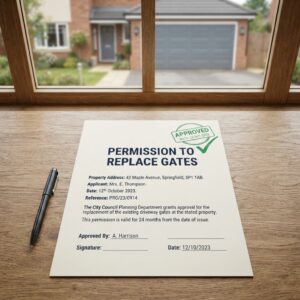
- Without a permit and a passed final inspection, the label is a manufacturer’s claim that nobody independent has verified, and no wind mitigation inspector has to accept it.
What a rating actually is
Everything in this article rests on one number, so it is worth spending a moment on where it comes from and what it does not mean.
Design pressure, not wind speed
A rated door carries a design pressure expressed in pounds per square foot. It is the uniform pressure the door was tested to carry across its whole face without failing. Wind speed is an input to that figure rather than the figure itself. The pressure at your opening depends on the design wind speed for your address under ASCE 7, the exposure category of the lot, the height of the building, the size of the opening and where it sits relative to the corner of the house. Two identical doors a mile apart can face meaningfully different loads, which is why the code requires the label to state pressure rather than a speed.
So when a brochure says the door is good for 150 mph, treat it as marketing. Ask what the design pressure is and what your address requires. Those two numbers are the conversation.
Positive, negative, and which is larger
The label gives two figures, a positive and a negative. Positive is wind pushing the door inward, negative is suction pulling it outward as air accelerates around the building. On most residential openings the negative number is the larger of the two, and it is the one people forget exists. A door quoted with a single figure has been simplified by whoever wrote the quote.
Worth knowing how the pressure test runs. Under ANSI/DASMA 108 or the Florida standard TAS 202, the door is loaded to its design pressure and then to one and a half times that figure for a short hold, in both directions. That factor is a test requirement rather than headroom you get to use. A door rated at 40 does not quietly perform at 60 through six hours of storm.
The number belongs to a size
Doors are tested and approved at defined maximum widths and heights, and the approval says so in its limits of use. A series carrying a strong rating at 8 feet by 7 may carry a weaker one at 16 by 8, or may not be approved at that size at all. This is the most common gap we find when reading somebody else’s quote, and it is invisible unless you check the approval against your actual opening. Measure the opening rather than the door and write both figures down before you compare anything.
Wind-load rated and impact rated are different purchases
These two phrases get used interchangeably in advertising and they describe different tests, different products and different price points.
What the pressure test proves
A wind-load rated door resists uniform pressure. The panels are stiffened, the track is heavier, the hardware is sized to match, and the assembly has been loaded on a test rig and held. What it does not do is stop anything solid. A door can pass its pressure test comfortably and be opened by a piece of roof tile, and once the envelope is breached the pressure question becomes academic.
What the impact test adds
An impact-rated door has passed a missile test and then a cyclic pressure test on top of it, under ANSI/DASMA 115, or ASTM E1886 with E1996, or the Florida standards TAS 201 and 203. The common residential standard is missile level D, a nine-pound two-by-four fired at 50 feet per second, roughly 34 miles an hour, at specified points on the specimen. After the impacts the same specimen goes through thousands of pressure cycles to simulate the fluctuating load of a storm, because a hole that seems survivable at the moment of impact behaves differently over six hours of pressure working at its edges.
There is a level E above it, the same missile at 80 feet per second, reserved for essential facilities like hospitals and shelters. For a house, level D is the standard that matters.
Which one your address requires
Most of the Sarasota and Charlotte coastline sits inside the wind-borne debris region, defined as anywhere within a mile of the mean high-water line where the design wind speed reaches 130 mph, plus anywhere it reaches 140 regardless of distance. Inside that region, openings on new construction have to be impact rated or protected.
An existing home is not required to retrofit. But there is a detail worth knowing when you compare a code-minimum door against a better one. Florida Building Code Section 609.4 permits garage doors to be designed for about 60 percent of the ASCE 7 pressures, an allowance windows and entry doors do not get. So a door that is fully code-compliant can be rated below the windows on either side of it, and recent storm assessments found exactly that failure sequence in modern homes.
Glass changes the category entirely
This one costs people money quietly, usually after the fact, and it is the part of a quote least likely to be explained.
Decorative inserts against impact glazing
A rated door with impact glazing has been tested with that glazing in place, as an assembly, and the approval covers it. A rated door with standard decorative inserts added is a different object. The panels may be rated and the glass is not, which makes the weakest part of the door a pane of ordinary glass in the top section. Inserts fitted after the fact, by anyone, generally take the installation outside the approval it was granted under.
What glass does to your insurance rating
The wind mitigation form treats openings as glazed or non-glazed. A solid garage door is non-glazed. Put windows in it and it becomes a glazed opening, and to count as protected the glass itself has to be impact rated. The form is scored on the weakest opening on the whole house, so a decorative window row in a garage door can drop the entire property’s rating and undo the credit the impact windows elsewhere were bought to earn. If you want the light, specify impact glazing from the start and make sure the approval you are shown covers the glazed configuration.
Full-view aluminum and glass doors
These exist in impact-rated versions and they perform well, with laminated glass in an aluminum frame engineered as a system. They are at the expensive end and they are heavier, which affects spring sizing and sometimes the header. If that is the look you want it is achievable. What is not achievable is getting there by putting glass into a door that was never tested with it.
The number you can actually look up
This is what separates a specification from a claim, and checking it costs nothing.
Florida Product Approval
Products sold for use in the state carry an approval numbered as FL followed by digits, held in a public database at floridabuilding.org. Search under exterior doors, subcategory sectional exterior door assemblies, and the manufacturer’s name. Each approval opens into a record with the evaluation report, the drawings and the installation instructions attached as downloadable documents. Ask any company quoting you for the FL number of the specific door proposed, at your exact width and height, before you sign anything. A company that has done this work has it ready.
Miami-Dade NOA
The high-velocity hurricane zone covering Miami-Dade and Broward runs its own approval system, and a product there needs a Notice of Acceptance issued under the TAS protocols, which are more demanding. We are not in that zone here, so an NOA is not required. It is accepted, and a product carrying one has been through a tougher process, which is worth weighing when two doors are priced similarly.
Reading the limits of use
The short section nobody reads is the one that decides most arguments. It states maximum width and height, whether glazing is covered, whether the approval applies in the high-velocity zone, and any conditions attached. Read it against your opening, then open the installation instructions, because those specify fastener type and length, spacing, what the jamb has to be made of, how many track brackets the door needs and how the header is attached. That document is what the county inspector will be holding, and it is the difference between a rated product and a rated installation.
Expert note from the Deluxe Garage Doors technicians
If you only take one habit from this article, make it this. Ask every company for the FL number and the door’s tested size, then ask what the design pressure is for your address and where they got it. The answers sort three quotes faster than any amount of reading about brands. What we see often enough to mention is a genuine rated door quoted at a size the approval does not cover, usually a sixteen-foot opening filled with a product tested at ten. Nobody is being dishonest. Somebody just did not open the limits of use. The other thing worth saying is that the panels are the part customers look at and the part that matters least in the price. The heavy items on our side of an estimate are the track gauge, the number of jamb brackets and whatever has to happen to the header and the jamb before a rated door can be anchored to them at all.
What the rating adds to the estimate
Understanding where the money goes makes a low bid readable, because a cheap hurricane door is cheap for reasons that are usually listed nowhere.
The door itself
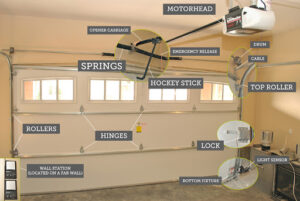
Heavier gauge steel in the skins, integral stiffeners in the sections, deeper end stiles, more hinges per joint, and horizontal struts across most or all sections rather than one on the top panel. On a two or three layer construction there is also the core, which adds stiffness as well as insulation. Installed, a wind-rated door commonly runs roughly 1,200 to 3,000 dollars for a single and 2,000 to 6,000 for a double. Impact-rated sits higher, generally 2,500 to 4,500 for a single and 4,000 to 10,000 for a double.
Track, jamb and header
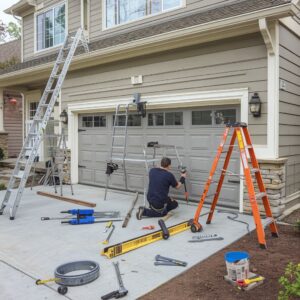
This is where quotes diverge most and where customers look least. A rated system uses heavier track, commonly fourteen gauge where builder-grade is thinner, with more brackets down each side and heavier stampings on them. Those brackets have to anchor into something sound, which on a lot of older houses here means repairing or replacing a wood jamb and anchoring it properly into the block behind it, sometimes with work to the header. A quote covering the door but not the opening it fastens to is quoting half the job, and the result performs like the anchors rather than like the label.
Springs, hardware and the opener
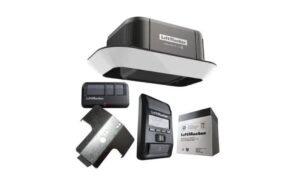
A heavier door needs a different spring specification. That is part of a proper installation rather than an upsell, and a correctly balanced door holds position when you disconnect the opener and lift it halfway by hand. Upgraded rollers with sealed bearings, a reinforced bottom bracket and coastal-grade fasteners all belong on a door near the water. The opener usually carries over, though its mounting bracket may need reinforcing for the extra weight.
Where a low bid is coming from
Almost always one of four places. A door rated below what the address requires. A door quoted outside its approved size. The opening excluded, meaning jamb, header and anchoring become somebody else’s problem. Or the permit left out, which is the next section. None of those appear as a line item. They appear as a smaller number, which is why the specification questions matter more than the price comparison.
Why the label proves nothing on its own
A rated door and a documented door are different things, and only one of them earns you anything.
The inspection is the only independent check
The county inspector verifies that the product installed matches the approval submitted, at the size approved, fastened the way the installation instructions specify, looking at the anchors, the bracket count and the header from inside the garage. That is the only moment anybody who does not work for the contractor examines the installation. Take it away and you are relying on the word of the company that fitted it, which is fine right up until it is not.
The credit runs on the record
Wind is priced separately on a Florida homeowners policy and the opening protection section of the wind mitigation form sets that portion. That form was rewritten this spring and now leans much harder on photographs and product documentation than on an inspector’s judgement.
A permit record with a passed final answers the question cleanly. No record leaves an inspector deciding whether to accept a sticker on an installation nobody verified, and plenty will not. The same logic applies to state grant money, which reimburses against permitted work with a closed file. Our My Safe Florida Home page covers where that process starts and stops.
Ten minutes with two bids
Put them side by side and ask the same six questions of each. What is the FL number of the specific door. What is its design pressure and what does my address require. Is it impact rated or wind-load only. What tested size does the approval cover. Does the quote include jamb, header and track anchoring to the installation instructions. Is the permit included, and who schedules the final inspection.
Six answers will usually collapse a two-thousand-dollar gap into something explainable, and occasionally reverse which quote you prefer. Our hurricane garage door installation service handles specification, approval documents, permit and inspection as one job across Englewood, Venice, North Port, Port Charlotte, Punta Gorda, Rotonda West, Placida and Sarasota County. If you have quotes in hand and want a second read on what they actually include, request a quote and ask us that directly.
FAQ
- Does a hurricane rating make the door quieter and the garage cooler?
- Not by itself, because those come from insulation and hardware rather than the rating. In practice rated doors are usually built in two or three layers with a foam core, so they tend to arrive insulated, and the R-value is a separate specification worth asking about rather than assuming. Quietness comes mostly from nylon rollers with sealed bearings and a well-balanced spring set, both worth specifying on any door near the water whatever the panels are rated to.
- Can I keep my existing tracks and hardware and just buy the rated panels?
- No, and any company offering that is not selling you what you think. A rating belongs to the assembly that was tested, including the track, brackets, hinges, rollers and fasteners. Panels fitted to old track sit outside the approval, will not pass inspection, and cannot be counted on a wind mitigation form. The system is the product, which is also why labour on a rated door is higher than on a builder-grade swap.
- Does a rating expire or need renewing?
- Your installed door does not lose its rating with time, and a passed inspection stays part of the property record. What changes is the approval itself, since approvals are tied to code editions and get updated or archived as the code moves, which matters when specifying a new door rather than for one already fitted. Separately, your wind mitigation form is valid for five years, so the paperwork proving the door counts does need refreshing even though the door does not.
- My opening is an unusual size. Does that rule out a rated door?
- Usually not, though it narrows the field and can affect price. Approvals cover a range up to a maximum, so an odd width inside that range is generally fine, and manufacturers build to the opening rather than to stock sizes. It gets harder with an unusually wide opening or very low headroom, both common in older houses here, and the answer is sometimes reframing the opening rather than hunting for a door. That is a measuring conversation before it is a product one.
- Will I need a new opener for a rated door?
- Often not. The springs carry the weight rather than the opener, so a healthy unit generally handles a heavier door once the springs are sized correctly and the travel and force settings are reset. What can need attention is the mounting, since the bracket and header attachment take more load. If your opener is old enough that parts are scarce, doing both at once saves a second visit and is worth pricing.