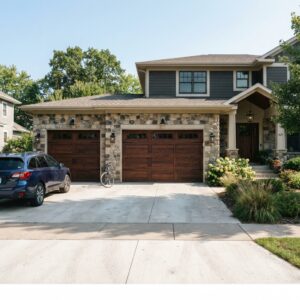

Port Charlotte is a particular kind of place to work on garage doors. The housing stock is remarkably consistent, the storms have hit it repeatedly, and the call sheet in this city looks different from the one in Venice or Sarasota.
What follows is what we see across Murdock, Charlotte Harbor, El Jobean, Harbour Heights, South Gulf Cove and the older sections off Midway and Olean. Why the doors here fail the way they do, what people order after a bad week of weather, how long it realistically takes, and what to look at if you are buying a house in this town rather than living in one.
- Most of Port Charlotte was platted in the late fifties and built through the sixties and seventies, leaving a deep inventory of homes predating Florida’s statewide code and plenty of original openings.
- Doors here rarely fail at the panel first. They fail at the wood jamb and the track anchors, and salt plus repeated storm loading is what gets them there.
- Water damage from Ian and the seasons after it shows up months later at the bottom section and in the opener, long after the visible cleanup finished.
- The most ordered jobs are springs and cables, single panel replacement, impact-rated full replacement, and openers with battery backup, roughly in that order.
- Ordinary weeks are same-day or next-day work. The fortnight after a landfall is a different world and the way to be early in it is to be on the list before the storm.
- Buying here, the door tells you something about the house. Age, permit history and the bottom eighteen inches are the three things to look at.
Why the doors here are the way they are
You can predict a lot about a Port Charlotte garage door from the year on the property record, because this city was built in waves and each wave shares a specification.
A city platted in the fifties, built through the sixties
General Development Corporation laid out Port Charlotte from the late nineteen fifties, dredging the canal network as it went and selling lots across a very large footprint. Building followed through the sixties and seventies, mostly single-story concrete block ranches on slab.
That history left an enormous number of homes predating Florida’s statewide building code entirely. Some have been reroofed, rewired and updated since, though a surprising number still have their original garage opening details, because the door gets replaced and the framing around it does not. Newer construction sits alongside it, particularly the rebuild activity of the last few years, so the town is not uniform. The older stock is still the majority of what we work on.
What that means at the opening itself
Two features show up again and again. The first is the wood jamb, a wooden buck fixed to block, which is what the track brackets are anchored to. Sixty-odd years of Gulf humidity and salt does not improve a wood jamb, and the failure we find most often is a lag screw that turns forever without tightening because the wood behind it has gone soft.
The second is size. A great many original openings here are eight or nine feet wide by seven tall, single-car, sometimes converted from a carport at some point in the property’s life, and those conversions were built to whatever standard the moment allowed. Low headroom is common too, which limits which track configurations and openers fit, and it is a detail a quote should address rather than discover on installation day.
The rebuild wave and its paperwork
Thousands of doors in this town were replaced in the seasons following Ian, and the quality sits on a very wide spectrum. Some of it was excellent. Some was done fast, by crews who came from out of state for the work and left afterward. What we run into now is homeowners with a newer door and no documentation for it. No approval number, no permit record, sometimes no company name they can find. The door might be perfectly good, but without paperwork it cannot be counted on a wind mitigation form, and that gap is worth closing while the door is still young.
What the storms actually left behind
Charley in 2004 and Ian in 2022 both crossed this county, and Helene, Milton and Debby added their own contributions. Those damage patterns are still generating service calls.
Wind and debris on the panels
The visible damage is dents and punctures from flying material, and on a street of older roofs the debris supply is generous. A shingle corner or a piece of soffit hitting a twenty-six gauge panel at speed leaves a crease, and a crease is a permanent hinge that pressure will find again. The other visible pattern is a door that bowed inward and stayed slightly bowed, or one that came off its track and was pushed back on by a neighbour with a pry bar. Both look serviceable and neither is.
Water, which arrives on a delay
This is the part specific to a canal town. Where surge or flooding reached the slab, the bottom section of a steel door sat in salt water, and the damage from that does not present itself for months.
What we find is corrosion starting inside the bottom section where you cannot see it, at the return edge and around the bottom bracket. The panel looks painted and fine from the driveway while the metal behind it is going. The same water reaches the roller bearings, the cable at the drum, and the opener if the garage flooded deep enough. If your garage took water in any of the recent seasons and nobody has looked at the door since, that inspection is overdue rather than optional.
The damage nobody sees
The loading a door takes during a storm does not have to break anything to matter. Fasteners loosen, track brackets shift a millimetre, the jamb takes a little more crushing around each anchor. That is why we get calls in January for doors that survived October. Nothing failed on the night. The system moved, and it has been running slightly out of true ever since, wearing rollers and cables until something gives.
What people here order most
Roughly in the order the phone rings, here is the pattern for this city.
Springs, cables and rollers
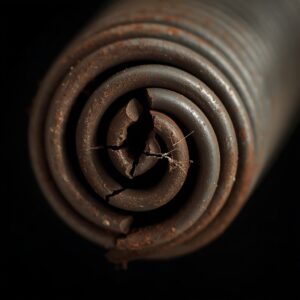
The single most common call, storm or no storm. Springs are wear parts rated in cycles, and a great many doors here run on their original set or a replacement fitted during the post-Charley rebuild, well past the usual seven to twelve year window. Cables come with them more often than elsewhere, because salt air and standing water corrode the wire from inside the lay, and rollers follow, since a bearing full of salt grinds itself apart quietly. Our spring repair page covers why springs get changed as a pair.
One panel or the whole door
After debris damage this is the conversation we have most. A single section can often be replaced if the door is reasonably new and the model still in production, which keeps the cost down considerably. On a nineteen-seventies door the answer is usually different. Sections for discontinued models are hard or impossible to source, colour-matching a decades-old finish is not realistic, and a new section bolted between old ones does not fix the tired assembly around it. At that point the panel quote is money spent on the way to a replacement.
Impact-rated replacement, with the paperwork attached
This is the order that has grown most in the last few seasons, and the reason is usually insurance rather than fear. Most of this county sits inside the wind-borne debris region, and an impact-rated door is the version that counts as a protected opening on the wind mitigation form. That matters here because roof age and documentation drive insurability in Charlotte County, and homeowners have worked that out. Our hurricane garage door installation service handles the specification, the approval documents, the permit and the inspection as one job, because a door without those is a door that does not count.
Openers, and specifically openers with battery backup
Outages are routine here, from summer thunderstorms as much as named storms. An opener with a working battery backup runs the door through one instead of leaving somebody hunting for the release cord in the dark. Many units from the last decade accept a factory battery as an add-on, so this is often a part rather than a replacement, and where the opener is old enough that it cannot take one, that is a fair reason to change it. Our opener installation page covers which models support a backup.
What a typical job looks like here
Three patterns cover most of what we do here, and if your situation is one of them you will know it.
The canal-front single door
A single eight-by-seven on a house near the water, twenty years or more on the hardware, and the customer called because it started grinding. The work is usually rollers, cables, a spring pair and a fresh bottom seal, plus tightening or re-anchoring the track brackets into sound material. Coastal-grade parts go on rather than standard ones, because the ones coming off tell us what the location does. Half a day, and the door runs quietly again for a long time.
The nineteen-seventies double on a soft jamb
Sixteen feet wide, original opening, two brackets a side, and a jamb you can push a screwdriver into. Here the door is only part of the job. The jamb gets repaired or replaced and anchored properly into the block behind it, the bracket count goes up, and the door goes on afterward. Quoting the door alone on a house like this produces a rated door hanging on unsound fixings, and we say so at the estimate.
The post-claim door with no records
A door fitted in the rebuild years, in decent condition, with nothing on paper. What we do is find the label, look the approval up, check it covers the opening size, see whether the anchoring matches the installation instructions, and photograph everything. Sometimes the outcome is that the door is fine and the homeowner now has the documentation they lacked. Sometimes the anchoring is wrong and that is correctable. Either way it is a short visit that usually saves money rather than costing it.
Expert note from the Deluxe Garage Doors technicians
Port Charlotte has a tell that other towns do not. When we take the trim off an older opening here we very often find that the jamb has been replaced once already, usually after Charley, and that the new wood was fixed to the old block with whatever was on the truck that week. Two decades on, those fixings are the weak point rather than anything on the door. So on a house from the sixties or seventies, the first thing we look at is not the panels. It is what the track is bolted to. The other pattern worth mentioning is timing. The calls after a storm arrive in two waves, one immediately and one about three months later from people whose door survived the night and then quietly failed. If your door was loaded in a storm and you have not had anybody look at it since, you are in the second wave whether you know it or not.
Response times, said honestly
Nobody enjoys the truth about scheduling, so here is what it looks like from this side.
An ordinary week
Broken springs, doors off track and stuck vehicles are treated as urgent. Call in the morning on a weekday and same-day is normal, with next-day the usual worst case. Repairs needing a part we do not carry run a few days, though stocked spring sizes, cable sets, rollers, bottom seals and common opener parts all ride on the van.
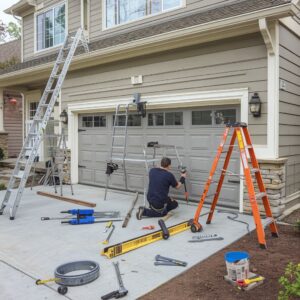
A full replacement is a different clock. A rated door is built to your opening’s dimensions, so figure two to six weeks for manufacture and delivery, with permit review running in parallel, then a day for installation and a few days for the final inspection. The permit is rarely the delay. The factory is.
The fortnight after a landfall
This is where honesty matters more than optimism. After a direct hit every garage door company in the region is triaging, and so is every building department, supplier and adjuster. Emergency work comes first, meaning doors that will not close, doors hanging off tracks and vehicles trapped in garages. Replacements queue behind that, and manufacturers run long because the whole coast ordered at once. A door that takes three weeks in February can take twice that in the month after a storm.
The useful thing to know is that securing a damaged door is often quick even when replacing it is not. Getting it closed, safe and locked is a short visit, and it buys the time to wait for the proper repair.
How to be earlier in the queue
Say the useful things when you call. Whether a vehicle is trapped. Whether the door will close at all. Whether the garage is the only entrance. Whether anybody in the household can operate the door by hand. Send a photo of the door from inside and of the springs above it before anybody has to ask, because that decides which parts come on the van and often turns two visits into one.
And the boring answer that works best. Book maintenance in the quiet half of the year. The households that come through storm seasons without emergencies are overwhelmingly the ones whose cables and springs got looked at in March.
If you are buying a house in Port Charlotte
The garage door is one of the cheapest pieces of due diligence on a house here, and in this town it tells you more than usual.
Three things to check inside the inspection period
Look for a label on the inside of the door, usually near the bottom or second section, listing the manufacturer, model and a design pressure. No label means no rating, and on a house of this vintage that is the likeliest outcome. Then run a hand along the bottom eighteen inches, inside and out, looking for corrosion, a hardened seal or a section that flexes where it should feel rigid. That is where flood water and salt do their work here, and it is the honest indicator of what the house has been through.
Then push the vertical track sideways. If it moves, the anchoring or the jamb is soft, and on a Port Charlotte house that is a repair to price rather than a surprise to inherit.
What to ask the seller for
The Florida Product Approval number for the door, if there is one. Any permit record for a replacement. Any wind mitigation report, and specifically the opening protection line rather than the summary. Then pull the property’s permit history from the county building department yourself. In a town where thousands of doors were replaced in a hurry, whether a permit exists is an informative question, and the answer is public.
Pricing it in
An unrated door on a house in the debris region is a known future cost. Reinforcement on a sound door runs a few hundred dollars. A rated replacement on a single opening is a low four-figure job, and a double with jamb work above that. Those are numbers you can put in a negotiation instead of a worry you carry to closing. Get a written quote inside the inspection period, and either move the price or have the work done before you take the keys. Our garage door services in Port Charlotte page has the details and estimates are free.
FAQ
- Do you charge a trip fee for Port Charlotte, since you are based in Englewood?
- No. Port Charlotte is inside our regular service area and we have crews in the city most days, so it is not an out-of-area call. What can carry a charge is genuine after-hours work, meaning evenings, weekends and holidays, and any company that says otherwise about a late Saturday callout is pricing it somewhere else. Ask for the total including any callout charge before you book.
- My door was damaged in a storm. Should I claim it on insurance or pay for the repair?
- Run the numbers before you file. Florida policies typically carry a separate hurricane deductible set as a percentage of the dwelling coverage rather than a flat figure, which on many homes here lands well above what a door repair or even a replacement costs. If the door is the only damage, a claim can produce no payment while still appearing on your claims history. Where the door is part of wider roof and interior damage, it belongs in the same claim. Your agent can tell you your deductible in a minute.
- Can you match a single panel on a door from the seventies?
- Usually not. Section profiles from that era are long out of production, the tooling no longer exists, and even where a compatible section can be found the finish will not match decades of Florida sun. We check before quoting a replacement, because when a match does exist it saves the customer a great deal. What we will not do is fit a visibly different section and call it a repair.
- Which parts of the area do you actually cover?
- All of Port Charlotte including Murdock, Charlotte Harbor, El Jobean, Harbour Heights and South Gulf Cove, plus Punta Gorda, North Port, Rotonda West, Placida, Englewood, Venice and Sarasota County. If you are unsure whether your address falls inside that, call and read out the street. We would rather tell you plainly than have you wait on a company that was never coming.
- Are there deed restrictions on garage door appearance here?
- It depends on the section. Much of the original platted land carries no architectural review at all, which is one reason the streets look varied, while newer subdivisions and some waterfront communities do have associations with approval requirements. Check your documents before ordering, since a rated door in a custom colour is generally non-returnable.